

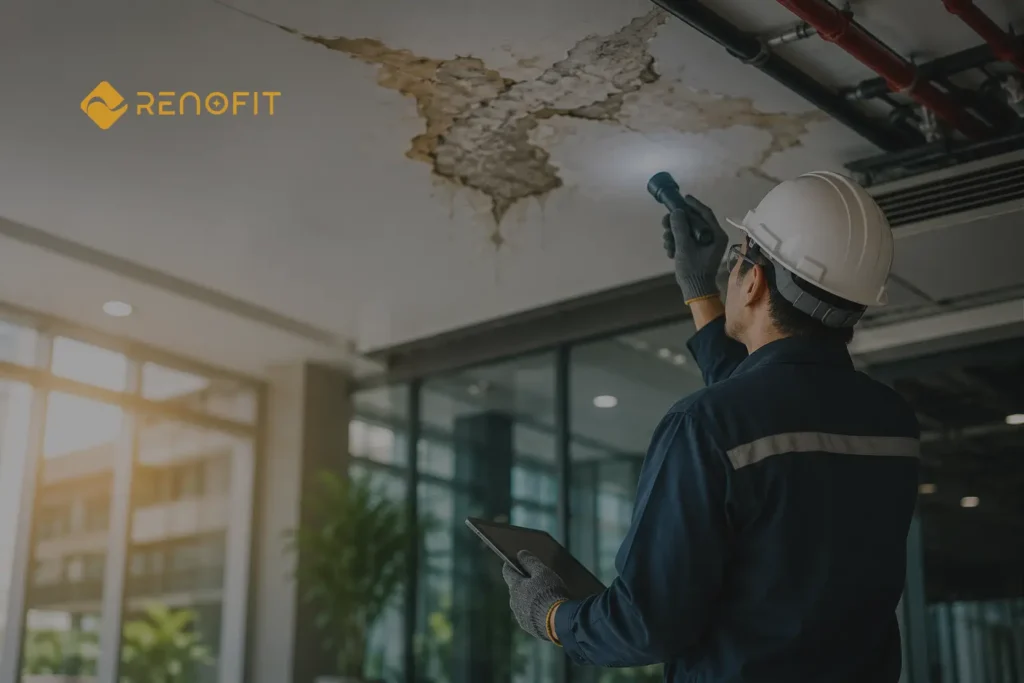
A small leak behind a wall, a flickering light, an unusual sound from an air-conditioning unit, or a slow-draining pipe may not seem urgent. Many property owners choose to monitor these issues and deal with them later, especially when the building is still functioning normally.
The problem is that building defects rarely remain exactly the same. A minor issue can gradually affect surrounding materials, equipment, or building systems. By the time the problem becomes visible or causes a complete failure, the repair may involve much more than the original defect.
This is why professional building maintenance focuses not only on fixing failures but also on identifying early warning signs. Regular inspections, preventive maintenance, proper documentation, and timely corrective work can help property owners control repair costs and protect the long-term performance of their buildings.
Why Small Maintenance Problems Should Not Be Ignored
Buildings are made up of interconnected systems. Plumbing, electrical, HVAC, drainage, waterproofing, finishes, and structural components don’t operate completely independently.
A small problem in one area can eventually affect another.
For example, a slow plumbing leak may initially damage only a small section of a wall. Continued moisture can then affect paint, plaster, insulation, flooring, or nearby electrical components. What started as a minor plumbing repair can eventually become a wider restoration project.
The same principle applies to mechanical and electrical equipment. A small abnormality in a motor, fan, pump, or electrical connection may indicate deterioration. If the warning sign is missed, the component may eventually fail and cause operational disruption.
Facility maintenance professionals therefore look beyond the visible symptom and try to understand the underlying cause.
1. Small Water Leaks Can Become Major Property Damage
Water is one of the most common causes of progressive building damage.
A leaking pipe, damaged seal, blocked drainage line, or failed waterproofing area may release only a small amount of water at first. Because the leak isn’t immediately causing flooding, it may be ignored.
But moisture can travel through porous construction materials.
Over time, persistent water exposure can contribute to:
- Peeling paint
- Damaged plaster
- Swollen flooring
- Ceiling stains
- Mold growth
- Corrosion of metal components
- Deterioration of finishes
- Damage to electrical installations
The difficult part is that water doesn’t always remain where the leak originates. Moisture can travel through walls and ceilings before becoming visible.
That is why recurring damp patches should be investigated rather than repeatedly painted over.
2. HVAC Problems Often Start With Small Warning Signs
Air-conditioning systems are essential for maintaining comfortable indoor environments, particularly in Dubai’s climate.
An HVAC system rarely goes from perfect operation to complete failure without warning.
Early indicators can include:
- Unusual noises
- Reduced cooling performance
- Increased operating time
- Water dripping from indoor units
- Unusual smells
- Poor airflow
- Unexpected increases in energy consumption
Ignoring these signs can place additional stress on the equipment.
A restricted filter, dirty coil, blocked drain, refrigerant issue, or deteriorating component may reduce system efficiency and eventually contribute to a larger failure.
Regular inspection and servicing help identify these issues before they result in an emergency breakdown.
3. Electrical Defects Can Become Safety Risks
Electrical maintenance requires particular attention because minor abnormalities can develop into serious safety concerns.
Flickering lights, warm electrical panels, repeated circuit trips, damaged switches, unusual buzzing sounds, or loose connections should not simply be treated as inconveniences.
These symptoms can indicate underlying electrical problems that require qualified assessment.
Ignoring an electrical defect may lead to:
- Equipment damage
- Unexpected power interruptions
- Circuit failure
- Overheating
- Increased maintenance requirements
- Potential safety hazards
Routine electrical inspections help identify deterioration and allow corrective work to be planned before an unexpected failure affects the building.
4. Blocked Drainage Can Create Bigger Problems
A slow drain is often treated as a minor inconvenience.
However, recurring drainage problems can indicate buildup, damaged pipes, poor flow, or another underlying issue.
If drainage is allowed to deteriorate, water can eventually overflow into surrounding areas. In commercial buildings, this can disrupt operations and affect occupants or customers.
Regular cleaning and inspection of drainage systems can help prevent blockages from progressing into larger plumbing problems.
5. Cracks and Damaged Finishes Can Reveal Hidden Issues
Not every wall crack indicates a structural problem. Some cracks are related to normal movement, shrinkage, or surface finishes.
The important factor is understanding the type, location, size, and progression of the crack.
A small crack may allow moisture to enter an exposed area. Repeated water penetration can then cause paint failure, plaster deterioration, or further surface damage.
Property owners should pay particular attention to cracks that:
- Keep returning after repair
- Become wider over time
- Appear alongside dampness
- Occur around openings or joints
- Are accompanied by other building defects
Early assessment helps determine whether the problem is cosmetic or requires further technical investigation.
6. Small Waterproofing Failures Can Spread
Waterproofing systems are designed to prevent moisture from reaching building materials and structural components.
When a waterproofing layer begins to fail, the visible symptoms may initially be small.
You may notice:
- Damp patches
- Peeling paint
- Efflorescence
- Mold
- Loose tiles
- Ceiling stains
- Musty smells
Simply repairing the visible finish doesn’t solve the problem if water continues to enter the building.
The source of moisture needs to be identified and addressed before affected surfaces are restored.
Why Reactive Maintenance Can Cost More
Reactive maintenance means addressing a problem after it becomes a failure.
This approach is sometimes necessary, particularly for unexpected breakdowns. However, relying entirely on reactive maintenance can create higher costs because failures often occur at inconvenient times and may affect surrounding systems.
A current 2026 article from the International Facility Management Association highlights how equipment failures often begin with subtle warning signs and notes that reactive repair costs can extend beyond the immediate repair through secondary damage, downtime, energy inefficiency, and related consequences.
Preventive maintenance takes a different approach.
Instead of waiting for a component to fail, maintenance teams inspect important systems, identify deterioration, and schedule corrective work based on condition and risk.
The U.S. Department of Energy similarly describes effective operations and maintenance as a combination of reactive, preventive, predictive, and reliability-centered approaches, with the right balance depending on the building and its systems.
Preventive Maintenance Helps Control Long-Term Costs
Preventive maintenance doesn’t mean replacing everything before it fails.
The goal is to understand which systems require attention, how frequently they should be inspected, and which warning signs indicate increasing risk.
A practical maintenance program may include:
HVAC
Filter inspection, coil cleaning, drainage checks, equipment servicing, and performance monitoring.
Plumbing
Leak checks, drainage inspection, valve testing, fixture inspection, and water-related defect monitoring.
Electrical
Panel inspection, connection checks, lighting maintenance, equipment assessment, and identification of abnormal conditions.
Building Envelope
Inspection of walls, roofs, sealants, waterproofing systems, doors, windows, and other areas exposed to moisture.
Interior Areas
Inspection of ceilings, floors, walls, doors, finishes, and areas showing signs of deterioration.
An effective maintenance programme should also keep records of inspections and repairs. Maintenance history helps teams identify recurring failures and understand which assets require additional attention. The Department of Energy recommends maintaining maintenance history for systems and components that affect safe and reliable operations.
How Property Owners Can Identify Problems Early
You don’t need to be a technical specialist to notice early warning signs.
Property owners and managers should pay attention to changes such as:
- Unusual equipment noises
- Repeated leaks
- New damp patches
- Flickering lights
- Strange smells
- Increasing energy consumption
- Slow drainage
- Cracked finishes
- Loose tiles
- Repeated equipment shutdowns
- Unusual temperature variations
The key is not simply noticing the symptom but recording when it occurs and whether it is becoming more frequent.
A problem that happens once may require monitoring. A problem that repeatedly returns deserves investigation.
Why Professional Inspections Matter
A professional maintenance team can look at the property as a complete system rather than treating every complaint as an isolated repair.
For example, repeated ceiling staining may require inspection of plumbing, waterproofing, drainage, and the floor or room above. Similarly, repeated HVAC failures may require more than replacing the failed component.
This approach helps identify root causes rather than repeatedly treating symptoms.
Property owners comparing the best facility management company in dubai should therefore look beyond the lowest service price. The quality of inspections, response procedures, preventive maintenance planning, technical expertise, reporting, and follow-up can have a much greater impact on long-term value.
What Should a Good Maintenance Programme Include?
A structured programme should be based on the actual property rather than a generic checklist.
Important elements include:
- Asset identification — Know which equipment and building systems require maintenance.
- Condition assessment — Understand the current condition of important components.
- Risk prioritisation — Address systems where failure could have greater consequences.
- Maintenance scheduling — Plan inspections and servicing at appropriate intervals.
- Corrective action — Resolve defects before they become larger failures.
- Documentation — Record inspections, repairs, recurring issues, and equipment history.
- Performance review — Use maintenance records to identify recurring problems and improve the programme.
This structured approach allows maintenance decisions to be based on evidence rather than emergency situations.
Choosing the Right Facility Management Partner
There are many top facility management companies in dubai, but property owners should compare them based on more than the number of services listed on a website.
Look at whether the provider can demonstrate:
- Qualified technical personnel
- Clear maintenance procedures
- Preventive maintenance planning
- Responsive communication
- Proper inspection records
- Transparent reporting
- Experience with similar properties
- Ability to coordinate multiple technical services
A strong maintenance partner should make it easier to understand what is happening inside the property and what needs attention next.
When Should You Invest in Professional Maintenance?
Professional maintenance becomes particularly valuable when a property has multiple systems, high occupancy, older equipment, or a history of recurring defects.
It can also be useful after renovation or major fit-out work because newly completed spaces still require ongoing inspection and maintenance.
If several different contractors are handling individual problems without a coordinated maintenance plan, the property may benefit from a more structured approach.
A reliable facility management service in dubai should provide more than emergency repairs. It should help property owners understand their building, prioritise maintenance requirements, and reduce avoidable disruptions.
Conclusion
Small building problems rarely become expensive because the original defect was always large. They become expensive when the warning sign is missed, the underlying cause remains unresolved, or maintenance is repeatedly postponed.
A small leak can damage finishes. A minor HVAC issue can develop into equipment failure. A loose electrical connection can create a serious fault. A blocked drain can lead to water damage. A recurring crack can allow moisture into vulnerable areas.
The solution isn’t to repair everything immediately. It is to identify problems early, understand their potential consequences, prioritise the right work, and maintain important building systems consistently.
For property owners looking for a leading facility management company dubai, the real value lies in a maintenance approach that protects building performance over time, not simply responding after something breaks.
A well-managed maintenance programme can reduce unexpected failures, extend equipment life, improve occupant comfort, protect property condition, and provide better control over long-term operating costs. In facility management, the most valuable repair is often the one that never becomes an emergency.