

Renovating a villa in Dubai often begins with a simple question: should you upgrade the interior first or focus on the exterior? The answer depends on the property’s current condition, your renovation goals, your budget and the improvements that matter most to your household.
Some homeowners want a more functional kitchen, updated bathrooms and better flooring. Others need to address exterior paint deterioration, cracks, waterproofing concerns or an outdated façade. In some properties, both areas require attention, making the order of work especially important.
Understanding the difference between interior and exterior renovation helps you prioritise the right improvements, coordinate the work efficiently and avoid spending money on cosmetic changes before addressing underlying problems.
What Does Villa Interior Renovation Include?
Interior renovation focuses on the spaces inside your villa. The objective may be to improve everyday functionality, update the appearance of rooms, replace worn materials or make the property more suitable for your family’s needs.
Common interior renovation works include:
1. Kitchen Renovation
A kitchen upgrade may involve replacing cabinets, updating worktops, improving storage, changing lighting and replacing old fittings. If the existing layout is inconvenient, you may also consider changing the arrangement of appliances and work areas.
Moving sinks, drainage points, electrical connections or walls requires additional planning and may involve approvals, depending on the proposed work.
2. Bathroom Renovation
Bathroom renovation can include replacing tiles, sanitary fittings, shower enclosures, vanity units and lighting. It may also involve plumbing improvements or waterproofing work.
Before selecting new finishes, check whether there are leaks, damaged grout, persistent dampness or other underlying problems. Covering these issues with new tiles without addressing their cause can lead to further repairs.
3. Flooring and Wall Finishes
Damaged tiles, worn flooring, peeling paint and outdated wall finishes can affect the appearance of an otherwise well-maintained villa.
Depending on the room and its intended use, homeowners may consider porcelain tiles, suitable stone finishes, wood-look flooring or fresh paint. Material selection should account for durability, maintenance and compatibility with the existing surface.
4. Ceiling, Lighting and Interior Finishing
Ceiling improvements, lighting upgrades, carpentry, wardrobes and decorative finishes can improve the appearance and usability of interior spaces.
However, before installing a new ceiling or closing access to existing services, check for wiring, plumbing or moisture issues that need attention.
What Does Villa Exterior Renovation Include?
Exterior renovation focuses on the outside of the property, including the façade, external walls, roof-related areas, boundary walls and outdoor spaces. The scope depends on the villa’s condition and the homeowner’s requirements.
1. Exterior Painting and Wall Finishing
Faded paint, peeling coatings and deteriorating finishes can make a villa look neglected. Repainting may improve its appearance, but the surface should be inspected before new paint is applied.
If the walls show damp patches, blistering or recurring paint failure, identify the cause first. The appropriate treatment depends on whether the problem involves moisture penetration, surface preparation or another building defect.
2. Façade Improvements
Façade renovation may involve repairing damaged finishes, updating approved materials, improving selected architectural details or repainting exterior surfaces.
Before changing exterior colours, windows, openings or other visible features, confirm the applicable community guidelines and approval requirements. The options available can vary between Dubai residential developments.
3. Roof and Waterproofing Work
Water ingress can damage ceilings, walls, insulation and interior finishes. Roof inspections and appropriate waterproofing repairs can therefore be important parts of a renovation project.
If your villa has recurring leaks or damp patches, investigate these issues before completing the affected interior surfaces. The repair method should be selected after assessing the source and extent of the water entry.
4. Outdoor Areas and Boundary Walls
Exterior upgrades may also include entrance improvements, boundary wall repairs, outdoor flooring, garden areas, lighting and selected shading structures.
Consider how the outdoor space will be used, how exposed materials are to sunlight and moisture, and what maintenance they will require. Pergolas, extensions and other additions may require additional approvals.
Interior vs Exterior Renovation: Key Differences
Although both types of renovation aim to improve a property, their priorities, work requirements and potential constraints can differ.
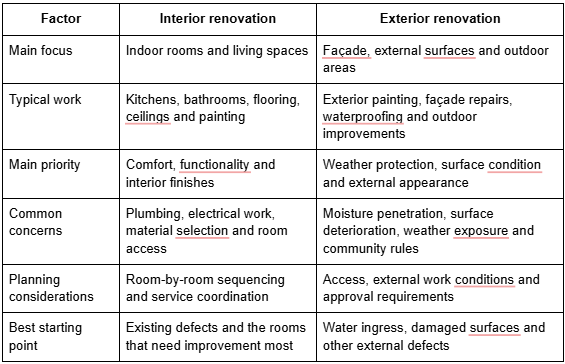
Neither approach is automatically better. The right choice depends on the problems you need to solve and the condition of your property.
Where Should You Start With Your Villa Renovation?
Before deciding which area to renovate, assess the property and separate urgent repairs from improvements that are mainly cosmetic.
Start With Structural or Moisture-Related Problems
If you notice persistent roof leaks, damp walls, damaged external finishes or signs of structural movement, arrange an appropriate inspection before investing in decorative upgrades.
For example, repainting an interior ceiling before resolving a roof leak may mean paying for the same finishing work twice. Similarly, installing new bathroom finishes without addressing a confirmed waterproofing defect can create further disruption.
Not every crack or damp patch indicates a serious structural issue, so the cause should be assessed rather than assumed.
Prioritise the Rooms You Use Every Day
If the property is in good condition but the interior no longer meets your needs, consider the spaces that affect daily life most.
A kitchen with insufficient storage, an outdated bathroom or damaged flooring may be a more useful priority than an exterior cosmetic upgrade. Rank improvements according to practical value rather than appearance alone.
Consider the Condition of the Exterior
Exterior finishes are exposed to sunlight, humidity, rain and other environmental conditions. If the façade or external surfaces are deteriorating, determine whether repairs are needed before planning decorative changes.
The same principle applies to waterproofing. Address confirmed water-entry problems before repairing the interior surfaces affected by them.
Review Your Budget and Project Scope
Prepare a list of essential repairs, functional upgrades and optional improvements. Obtain quotations that clearly explain the work included, the materials specified, exclusions and any approval-related requirements.
Keep a contingency for unforeseen issues, particularly when renovation involves older finishes or areas that cannot be fully inspected before work begins. The amount required depends on the property’s condition and the scope of work.
Plan the Sequence Before Work Begins
Some tasks depend on others being completed first. Plumbing or electrical changes, for example, should be coordinated with the relevant wall, floor and ceiling work. Waterproofing repairs should be completed and checked before affected finishes are reinstated.
A coordinated schedule helps reduce unnecessary rework and makes it easier to manage access, materials and different trades.
Can You Renovate the Interior and Exterior Together?
Yes. Combining both types of work may be practical when a villa needs extensive improvements or when the homeowner wants to coordinate several upgrades within one project.
A combined project can help align material selections, work schedules and contractor coordination. It may also reduce repeated disruption compared with completing unrelated renovations at different times. However, the actual savings depend on the scope, logistics and quotations, so combined renovation is not always the less expensive option.
A sensible sequence might be:
- Inspect the property and identify defects that need attention.
- Define the renovation scope and confirm applicable approvals.
- Complete necessary structural, waterproofing and service-related work.
- Carry out the relevant exterior and interior repairs.
- Install final finishes after the underlying work has been checked.
- Inspect completed work against the agreed scope before handover.
The precise order will vary according to the property and the type of renovation. Your contractor should prepare a project-specific sequence rather than applying the same schedule to every villa.
What Approvals Should You Check in Dubai?
Renovation requirements depend on the property’s location, the residential community and the nature of the proposed changes.
Dubai Municipality publishes building permit procedures for residential villas and other building types. Depending on the property and work involved, a project may also require review by the relevant master developer or community management. Structural changes, extensions, significant layout alterations and exterior modifications deserve particular attention.
Before starting work, confirm:
- Whether the proposed work requires a building permit or other authority approval.
- Whether the community or master developer requires a No Objection Certificate (NOC).
- Whether the contractor and relevant technical professionals meet the applicable requirements.
- Whether there are restrictions on working hours, site access, deliveries or waste removal.
Do not assume that all interior work is exempt or that every exterior change follows the same approval process. Check the requirements for your specific property and renovation scope before work begins.
For official guidance, consult the Dubai Municipality building permit procedures.
Common Mistakes to Avoid
Villa renovation can become more complicated when important decisions are postponed or when the work is planned without considering the condition of the property.
Choosing finishes before checking for defects: New paint, flooring or tiles will not solve an underlying leak or damaged substrate.
Treating the cheapest quotation as the best option: Compare the scope, material specifications, exclusions and payment terms before deciding.
Changing the scope during execution: Late decisions can affect material orders, labour coordination and the overall schedule.
Ignoring approval requirements: Confirm the relevant permissions before starting work, particularly for structural, layout or exterior changes.
Failing to inspect completed work: Check finishes, fittings and agreed items before signing off on the project.
Planning interior and exterior work separately when they overlap: Poor coordination can lead to repeated work, avoidable disruption and inconsistent finishing.
Frequently Asked Questions
Is interior renovation more important than exterior renovation?
Neither is always more important. Interior renovation may be the priority when rooms need functional improvements, while exterior renovation may be more urgent when the property has water ingress, deteriorating surfaces or other defects. Assess the condition of the villa before deciding.
Should I renovate the exterior before the interior?
If the exterior has a confirmed leak or defect that could damage interior finishes, address the underlying issue first. For a property without urgent defects, the order can depend on the scope, access requirements and project schedule.
Which interior areas should I renovate first?
Start with areas that have the greatest functional problems or require essential repairs. Kitchens, bathrooms, flooring and lighting are common priorities, but the best order depends on your household’s needs and the existing condition of each room.
Do exterior villa renovations in Dubai require approval?
Some exterior changes may require approval from the relevant authority or community management. Requirements vary by location and scope, particularly for façade changes, extensions and outdoor structures. Confirm the applicable rules before proceeding.
Can I complete villa renovation in stages?
Yes. Renovation can be divided into phases based on budget, urgency and practical requirements. However, work involving shared services, waterproofing or connected finishes should be coordinated carefully to avoid repeated labour and disruption.
How do I choose a villa renovation contractor in Dubai?
Look for a contractor who understands the proposed scope, explains the materials and exclusions clearly, coordinates the work properly and can clarify which approvals may apply. Review relevant experience and ensure the agreement documents the work, payment terms and handover expectations.
Plan Your Villa Renovation With Renofit UAE
Deciding between interior and exterior renovation starts with understanding what your villa needs today and which improvements will provide the most practical benefit. Address underlying defects first, set clear priorities and coordinate the work before selecting final finishes.
Renofit provides villa renovation services in Dubai, covering interior upgrades, kitchen and bathroom renovations, flooring, painting and finishing work. If you are considering improvements to one room or several areas of your property, contact our team to discuss your requirements and determine a suitable renovation scope.