

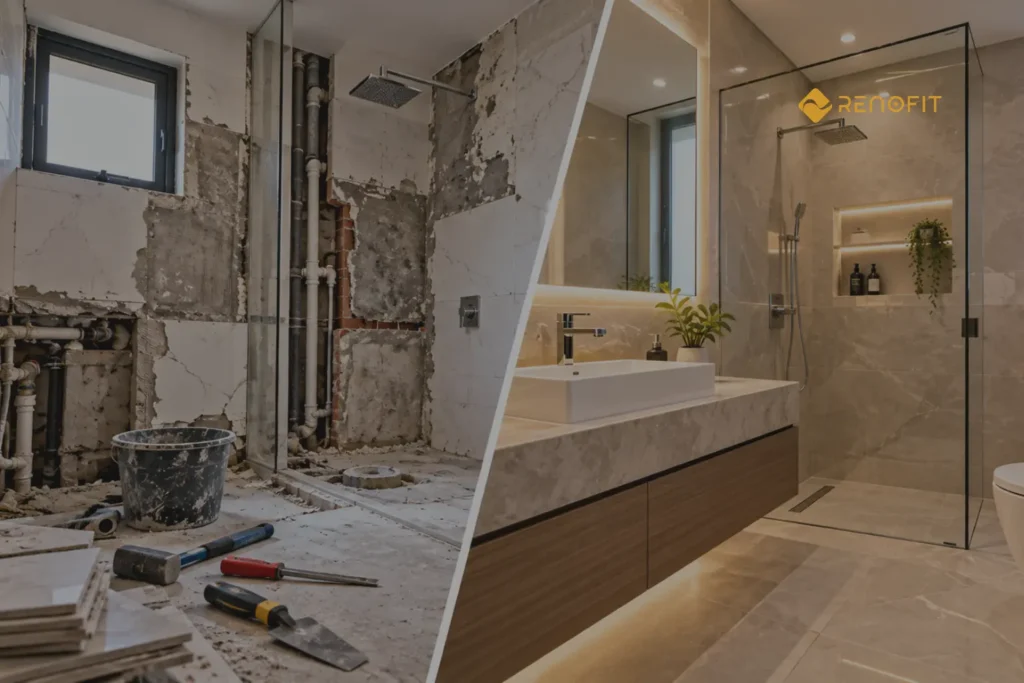
A bathroom can look clean and modern while still having problems hidden behind its tiles, plumbing or ceiling. Leaking showers, poor drainage, damaged grout and inadequate ventilation can gradually affect the condition of the bathroom and surrounding areas.
For homeowners planning a bathroom renovation in Dubai, choosing new tiles and fittings is only one part of the process. Identifying existing problems before installing new finishes helps prevent avoidable repairs and disruption later.
Whether you are updating an apartment bathroom or renovating a villa, this guide explains the common bathroom problems to check first, why they occur and what to consider before starting renovation work.
1. Bathroom Leaks and Water Seepage
Water leakage is one of the most important problems to investigate before renovating a bathroom. Water may escape through damaged plumbing connections, failed waterproofing, poorly sealed shower areas or defective drain connections.
Sometimes, the first visible sign appears outside the bathroom rather than inside it.
Warning signs to look for:
- Damp patches on adjoining walls or ceilings.
- Water stains appearing in the room below.
- Paint that bubbles, peels or changes colour.
- Persistent moisture around shower enclosures or bathroom fittings.
- A musty smell that continues despite regular cleaning.
Before replacing tiles or repainting affected surfaces, identify the source of the moisture. A plumbing leak requires a different repair from a failure in the waterproofing layer beneath the tiles.
Simply applying fresh silicone or covering a damp patch may hide the visible symptom without correcting the underlying problem.
During a full bathroom renovation, the contractor should inspect the affected areas and determine whether plumbing repairs, waterproofing replacement or localised repairs are appropriate.
2. Damaged or Failed Waterproofing
Waterproofing protects the building structure and adjacent spaces from water penetrating the bathroom floor and wet-area walls. Tiles and grout provide the finished surface, but they should not be treated as a substitute for a properly installed waterproofing system.
Problems can occur when the original waterproofing was incomplete, incorrectly applied, damaged during later work or allowed to deteriorate.
The risk is particularly important around showers, floor drains, wall-to-floor junctions and pipe penetrations.
What should be checked before renovation?
- The condition of the existing wet areas and any history of leakage.
- Whether the waterproofing system needs repair or replacement.
- The condition of the underlying surface before new materials are installed.
- Whether the proposed work includes appropriate waterproofing and testing before tiling.
If the bathroom is being stripped back to its substrate, the waterproofing should be completed according to the selected system’s specifications. Any required curing and water testing should take place before the new tiles conceal the work.
This stage deserves careful attention because repairing a failed waterproofing system after the bathroom has been finished can require removing the new flooring or wall tiles.
3. Poor Drainage and Standing Water
Bathroom floors should direct water towards the appropriate drain. When the floor slope is inadequate, the drain is poorly positioned or the drainage system is obstructed, water may collect in certain areas instead of flowing away.
Standing water can make the bathroom uncomfortable to use and may contribute to persistent dampness, staining or deterioration around joints.
Common warning signs include:
- Water remaining on the floor long after showering.
- Water collecting near the shower entrance.
- Slow drainage from the shower or floor drain.
- Unpleasant smells coming from the drainage system.
Start by checking whether the drain is blocked or whether the problem involves the floor’s slope. These are different issues and may require different solutions.
If the floor is being replaced, drainage levels and floor falls should be reviewed before installing the new tiles. Moving a drain or changing the bathroom layout may also require plumbing adjustments and additional planning.
Correcting drainage during renovation is generally more practical than trying to address a poorly sloped floor after the new finishes have been installed.
4. Cracked, Loose or Hollow-Sounding Tiles
Bathroom tiles can crack, loosen or separate from the underlying surface for several reasons. These may include inadequate adhesive coverage, movement in the substrate, moisture-related damage or poor installation.
A damaged tile does not automatically mean that the entire bathroom needs renovation. The extent of the problem and the condition of the underlying surface should determine the next step.
Signs that need attention:
- Tiles that move when pressure is applied.
- Cracks that repeatedly appear in the same area.
- Tiles that sound hollow when gently tapped.
- Grout that continues to crack or disappear.
- Tiles lifting near the shower or floor drain.
If only a small area is affected and the surrounding surface is sound, a local repair may be sufficient. Widespread loose tiles or recurring damage may indicate a more extensive problem.
Before installing replacement tiles, check the substrate and investigate any moisture concerns. Fixing the visible tile without addressing the cause may lead to similar damage again.
5. Cracked Grout and Deteriorating Silicone
Grout and silicone play different roles in a bathroom. Grout fills the joints between tiles, while suitable sealants are used at selected junctions where movement or changes in material require a flexible seal.
Over time, these materials can crack, discolour, detach or develop mould. Regular exposure to water and cleaning products can contribute to deterioration.
However, damaged grout does not always mean the waterproofing beneath the tiles has failed.
What should you do?
First, check whether the damage is limited to the grout or sealant. If the tiles remain firmly fixed and there are no signs of leakage, localised maintenance may be enough.
If the same joints repeatedly crack, the tiles are loose or moisture appears outside the wet area, investigate further before simply applying new grout or silicone.
During bathroom renovation, use materials suitable for the location and follow the manufacturer’s preparation and curing instructions. Proper surface preparation is important for achieving a durable finish.
6. Poor Ventilation and Persistent Mould
Bathrooms generate moisture through showers, bathing and regular cleaning. When ventilation is insufficient, moisture can remain on walls, ceilings and other surfaces, creating conditions that encourage mould growth.
This may lead to recurring black spots around sealant, peeling paint, condensation and unpleasant smells.
Before renovating, check whether the bathroom’s exhaust fan works effectively and whether the ventilation arrangement is appropriate for the space.
Potential improvements may include repairing or replacing a faulty exhaust fan, addressing restricted airflow and using suitable moisture-resistant finishes in appropriate areas.
If mould keeps returning, cleaning alone may not solve the problem. The underlying moisture source needs to be identified, especially when mould appears alongside damp patches or damaged surfaces.
Persistent mould over a large area or suspected hidden moisture may require a qualified professional to assess the affected materials before renovation proceeds.
7. Outdated Plumbing and Leaking Fixtures
A bathroom renovation is an opportunity to inspect accessible plumbing and identify problems before the walls and floors are closed.
Older or damaged connections may cause dripping taps, leaking valves, inconsistent water flow or recurring maintenance issues. Poorly positioned plumbing can also limit options when changing the layout.
Before replacing the bathroom fittings, consider:
- Whether taps and valves leak or operate properly.
- Whether visible pipes and connections show signs of corrosion or damage.
- Whether the drainage system works as expected.
- Whether the existing plumbing can support the proposed layout.
- Whether moving a basin, shower or toilet is practical.
Changing the position of sanitaryware can involve additional pipework, floor adjustments and approval considerations. It is therefore worth confirming the feasibility of the proposed layout before purchasing fittings.
If the existing arrangement works well, replacing worn fixtures without moving the plumbing may reduce the amount of work required. The right decision depends on the condition of the existing installation and your renovation goals.
8. Insufficient Storage and an Inefficient Layout
Not every bathroom problem involves water damage. Limited storage, awkward fixture placement and poor use of available space can make a bathroom difficult to maintain and uncomfortable for everyday use.
A renovation provides an opportunity to review how the room functions rather than simply replacing the existing finishes.
Practical improvements may include:
- A vanity unit with more useful storage.
- Repositioned accessories for easier access.
- Better use of wall space.
- A shower enclosure that suits the available room.
- Improved lighting around the mirror and basin.
- A layout that provides adequate clearance around fixtures.
Before changing the arrangement, check the existing plumbing, door swing, ventilation and available floor space. A design that looks attractive in a photograph may not work well in a compact bathroom.
Choosing the layout before finalising materials also helps coordinate plumbing, electrical work, tiling and fixture installation.
9. Poor Lighting and Inadequate Electrical Planning
Insufficient lighting can make a bathroom feel dark and make routine tasks less convenient. Renovation is a good time to review the position of ceiling lights, mirror lighting, switches and any proposed electrical upgrades.
Electrical work in bathrooms requires particular care because water and electricity create additional safety risks.
Before work begins, identify the lighting requirements and have electrical changes assessed and completed by appropriately qualified professionals. Equipment and fittings should be suitable for their intended bathroom locations and comply with applicable requirements.
Avoid finalising the ceiling or wall finishes before the necessary wiring and service coordination have been completed.
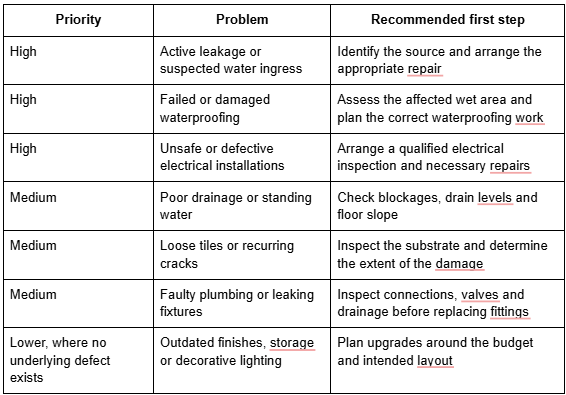
10. What Should You Fix First During Bathroom Renovation?
When several issues exist at once, prioritise problems according to their impact rather than the order in which they are noticed.
11. How to Prepare for a Bathroom Renovation in Dubai
Once the main problems have been identified, establish the renovation scope before work starts.
Inspect the existing bathroom. Record visible damage, leaks, drainage issues and any repairs that have been attempted previously.
Decide what needs to change. Separate essential repairs from optional improvements such as new tiles, vanities, lighting and decorative finishes.
Confirm the work involved. Ask the contractor to explain whether the project requires localised repairs, removal of existing finishes, plumbing changes or replacement of the waterproofing system.
Check applicable permissions. Apartment buildings and residential communities may have work permits, access arrangements and restrictions on working hours. Confirm the requirements with the relevant building management or authority before scheduling work.
Compare detailed quotations. Review the scope, materials, exclusions, payment terms and treatment of unforeseen work. A low initial quotation may not include every repair or finishing item.
Agree on the sequence. Plumbing, electrical work, substrate preparation, waterproofing, tiling and fixture installation need to be coordinated appropriately. Waterproofing should be inspected and any specified testing completed before it is covered.
For bathroom renovation in Dubai, careful preparation helps homeowners make informed decisions before committing to materials and finishing work.
Frequently Asked Questions
What is the most important problem to fix before bathroom renovation?
Investigate active leaks, water ingress and suspected waterproofing failures first. These issues can damage surrounding finishes and may require work beneath the visible surface. The correct repair depends on the cause.
Can I renovate my bathroom without replacing all the tiles?
Yes, in some cases. If the existing tiles are firmly fixed, the underlying surface is suitable and there are no unresolved leakage or waterproofing problems, a limited refresh may be possible. Loose tiles, water damage or a major layout change may require more extensive work.
Why does water collect on my bathroom floor?
Possible causes include a blocked drain, an incorrectly positioned drain or insufficient floor slope. Check the drainage system and floor levels before deciding on a repair.
Do I need to replace bathroom waterproofing during every renovation?
Not necessarily. The decision depends on the existing system, the condition of the bathroom and the extent of the proposed work. If there are signs of leakage or the renovation exposes damaged waterproofing, the affected areas should be assessed before new finishes are installed.
How can I prevent mould from returning after renovation?
Address the source of moisture, ensure ventilation works effectively, repair leaks and use appropriate materials. If mould continues to return, investigate possible hidden dampness rather than relying only on repeated cleaning.
Do I need approval for bathroom renovation in Dubai?
Requirements depend on the property, the building or community rules and the proposed work. Check with the relevant building management or authority before starting, particularly if you are changing the layout, plumbing or other building services.
How do I choose a bathroom renovation contractor in Dubai?
Look for a contractor who explains the scope clearly, inspects existing problems, specifies the materials and repair methods, coordinates the different trades and clarifies any applicable approval requirements. Compare quotations based on what is included rather than price alone.
Plan Your Bathroom Renovation with Renofit UAE
A successful bathroom renovation starts with understanding what needs to be repaired before deciding which finishes to install. Addressing leakage, waterproofing, drainage, plumbing and ventilation concerns at the appropriate stage can help prevent avoidable rework and improve the practicality of the finished bathroom.
Renofit provides villa renovation services in Dubai, including bathroom upgrades, interior improvements, flooring, painting and finishing work. If you are planning to update your bathroom or renovate several areas of your villa, contact our team to discuss the scope of work and the improvements your property requires.