


Renovating a home in Dubai can be an exciting opportunity to improve comfort, functionality, and property value. Whether you are upgrading an apartment in Dubai Marina, modernising a villa in Arabian Ranches, or refreshing a family home in Jumeirah, successful renovation depends on careful planning, realistic budgeting, and choosing the right professionals.
However, unexpected expenses, approval delays, material shortages, and poor project coordination can quickly turn a renovation into a stressful experience.
The best way to avoid costly home renovation delays in Dubai is to define your project scope, confirm the required permits and building approvals, finalise your budget, select reliable contractors, and establish a realistic timeline before work begins.
In this guide, we explain how to plan a home renovation in Dubai step by step, avoid common mistakes, and keep your project on schedule.
Why Do Dubai Home Renovation Projects Take So Long?
It’s critical to comprehend potential causes of unforeseen delays before beginning any renovation project.
Common reasons include:
- Approval issues: Starting work before obtaining the necessary permissions from the relevant authority, building management, or community developer.
- Unclear project scope: Making design changes after construction has started.
- Budget shortages: Running out of funds when unexpected repairs arise.
- Material availability: Ordering tiles, lighting, sanitaryware, or custom furniture too late.
- Contractor coordination problems: Poor communication between designers, electricians, plumbers, carpenters, and other trades.
- Unexpected structural or technical issues: Discovering hidden plumbing leaks, electrical faults, or damaged finishes during demolition.
Addressing these risks early helps homeowners reduce disruptions, control costs, and complete renovations more efficiently.
1. Define Your Home Renovation Goals Before Starting
Knowing exactly what you want to accomplish is the first step in organizing a home makeover in Dubai.
Are you renovating to improve everyday living, modernise an outdated interior, prepare a property for rental, or increase its appeal before selling?
Your objectives will influence the design, budget, materials, and project duration.
Create a renovation checklist
Divide your requirements into three categories:
- Essential improvements: Plumbing repairs, electrical upgrades, damaged flooring, waterproofing, or other necessary maintenance.
- Functional upgrades: Kitchen improvements, additional storage, lighting changes, or bathroom modernisation.
- Aesthetic improvements: Wall painting, decorative features, furniture upgrades, and interior styling.
Prioritise essential work before optional upgrades. This method facilitates budget allocation and prevents needless modifications during construction.
For example, a homeowner renovating an apartment in Business Bay might prioritise kitchen storage, bathroom improvements, and lighting before investing in decorative wall panels or premium furniture.
Expert tip: Prepare a written list of requirements and confirm it with your interior designer or renovation contractor before requesting a final quotation.
2. Set a Realistic Home Renovation Budget
One of the most crucial measures in preventing renovation delays is budget planning.
A project can come to a standstill when homeowners underestimate costs or fail to account for additional work. A detailed budget helps you make informed decisions before committing to the project.
Your renovation budget should consider:
- Design and consultation fees
- Demolition and waste removal
- Civil and finishing work
- Electrical and plumbing upgrades
- Flooring, tiles, and wall finishes
- Kitchen cabinets and bathroom fittings
- Furniture, lighting, and decorative elements
- Contractor fees and applicable approval costs
- Cleaning, inspection, and final handover
It is also sensible to reserve approximately 10–15% of your planned budget as a contingency fund. Older properties or renovations involving concealed plumbing, electrical systems, or structural elements may require a larger allowance.
How can you avoid renovation cost overruns?
Request an itemised quotation instead of accepting a single lump-sum estimate without supporting details.
Your quotation should clearly identify the materials, quantities, labour, payment milestones, exclusions, and additional-work charges.
Instead of focusing just on pricing, compare quotes based on the actual extent and quality of the goods.
A lower initial quotation may not represent better value if important work is excluded and added later.
3. Check Dubai Renovation Permits and Building Approvals Early
Ignoring which approvals are necessary is one of the most common reasons why home renovations take longer than expected.
You could require permission from the appropriate authority, building management, property owner, or community developer, depending on the location of the property and the nature of the work.
Requirements can differ between apartments, villas, gated communities, and buildings managed by different authorities.
For example, the Dubai Development Authority provides fit-out permit services with specified documentation requirements, including relevant no-objection certificates and approved drawings where applicable. Dubai Municipality also publishes building permit procedures for different types of buildings.
Ask your contractor to verify the standards that apply to your particular property before beginning any work.
What should you check before renovation begins?
- Whether a renovation or maintenance permit is required.
- Whether building management or the community developer requires a no-objection certificate.
- Whether approved drawings or technical documents must be submitted.
- Whether there are restrictions on working hours, noise, deliveries, or waste removal.
- Whether specialist approvals are required for particular electrical, plumbing, fire-safety, or structural works.
Do not assume that approval for minor maintenance automatically covers major alterations.
Important: Obtain the necessary approvals before beginning the work they cover. Permit requirements depend on the property’s location, the responsible authority, and the nature of the proposed renovation.
For official guidance, consult the Dubai Municipality building permit procedures and the Dubai Development Authority permits and NOCs.
4. Choose an Experienced Home Renovation Contractor in Dubai
The contractor you select can significantly influence the quality, cost, and completion time of your renovation.
An experienced contractor should understand local building requirements, coordinate different trades, manage material deliveries, and communicate clearly throughout the project.
Before making a decision, evaluate more than the quotation.
Questions to ask your renovation contractor
- Have you completed similar apartment or villa renovation projects in Dubai?
- Can you provide examples of previous work and client references?
- Will you oversee the coordination of building management and the necessary approvals?
- Who will supervise the work on-site?
- What is included and excluded from the quotation?
- How will delays, defects, and additional costs be handled?
- What warranty or post-completion support do you provide?
Verify the contractor’s relevant licences, qualifications, and approvals for the proposed scope of work.
You should also establish who is responsible for design coordination, procurement, site supervision, and final inspections.
A clear contract protects both the homeowner and the contractor by defining responsibilities, deliverables, and expectations.
5. Finalise the Design and Materials Before Construction
Last-minute design decisions can disrupt the entire renovation schedule.
For example, changing bathroom tiles after waterproofing has started or selecting kitchen cabinets after measurements have been finalised can result in rework, additional labour, and delayed deliveries.
To reduce these risks, finalise your major design decisions before construction begins.
Prepare a material and design schedule
Your schedule should include:
- Floor and wall tiles
- Paint colours and finishes
- Kitchen cabinet materials and hardware
- Bathroom fittings and sanitaryware
- Lighting fixtures and electrical accessories
- Doors, handles, and decorative features
- Furniture and custom-made joinery
Confirm product availability, delivery estimates, dimensions, and installation requirements before placing orders.
Where possible, select suitable alternatives for critical materials. If a preferred product becomes unavailable, an approved alternative can help prevent unnecessary downtime.
Practical tip: Order imported, customised, or made-to-measure items early, as they may require more lead time than standard products.
6. Create a Realistic Renovation Timeline
A renovation schedule should reflect the actual work involved rather than an ideal completion date.
The project timeline depends on property size, renovation complexity, approval requirements, material availability, and the number of trades involved.
A typical planning sequence may look like this:
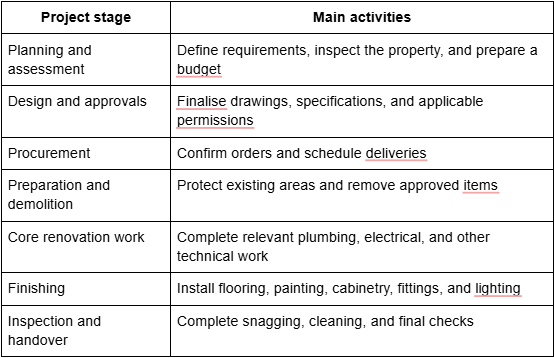
These stages may overlap when appropriate, but some activities must be completed before others can begin.
For example, necessary plumbing and electrical work should generally be completed and checked before affected surfaces are closed or finished.
Your contractor should prepare a project-specific schedule with milestone dates, dependencies, inspection points, and realistic allowances for approvals and deliveries.
Avoid scheduling every stage back-to-back without any flexibility. A small amount of contingency time can help prevent one delayed activity from affecting the entire project.
7. Coordinate Contractors, Suppliers, and Building Management
Even a well-designed renovation can experience delays when different teams are not properly coordinated.
Electricians, plumbers, painters, tilers, carpenters, and other specialists often depend on one another to complete their work in the correct sequence.
For instance, a carpenter may be unable to install kitchen cabinets until the relevant electrical and plumbing work has been completed and checked.
To improve coordination:
- Assign one person to manage daily project communication.
- Share the approved drawings and specifications with all relevant trades.
- Confirm site access and permitted working hours in advance.
- Schedule deliveries around installation dates and site availability.
- Conduct regular progress inspections.
- Record decisions and changes in writing.
For apartment renovations, confirm lift bookings, delivery arrangements, protective coverings, and waste disposal procedures with building management where required.
A weekly progress meeting can help identify problems before they affect subsequent stages.
8. Prepare for Unexpected Problems in Older Properties
Not every renovation issue can be identified during the initial inspection.
Older homes may contain hidden water damage, deteriorated plumbing, outdated electrical installations, damaged waterproofing, or uneven surfaces.
These issues can become visible only after certain materials have been removed.
Before construction begins, arrange an appropriate property assessment. Where possible, investigate areas with a history of leaks, cracks, or electrical problems.
If an unexpected issue arises, ask your contractor to:
- Document the problem with photographs.
- Describe the suggested repair and its necessity.
- Provide a written cost estimate and timeline impact.
- Obtain your approval before proceeding with additional work, except where immediate action is necessary to address an urgent safety issue.
This process helps prevent misunderstandings and gives you better control over unexpected expenses.
It is also important not to cover up defects simply to maintain the original schedule. Proper repairs can prevent more expensive problems later.
9. Use Written Agreements and Track Project Progress
A written agreement is essential for managing expectations and reducing disputes.
Your contract should clearly state the agreed scope of work, project price, payment schedule, estimated completion date, material specifications, exclusions, and procedures for handling variations.
Include milestones that make progress easy to measure.
For example, payments may be linked to agreed stages of completion rather than informal promises or arbitrary dates. The exact arrangement should reflect the contract and the nature of the project.
Maintain a simple progress tracker with:
- Planned completion date
- Actual completion status
- Outstanding tasks
- Pending approvals
- Delayed materials
- Additional costs
- Decisions requiring homeowner approval
Photographs and written updates provide a useful record of the work completed.
If a delay occurs, ask the contractor to explain its cause, its effect on the remaining schedule, and the steps proposed to recover time where possible.
10. Complete a Proper Final Inspection Before Handover
The renovation is not complete simply because the workers have finished installing the visible elements.
A final inspection helps identify unfinished tasks, installation defects, and issues that should be resolved before handover.
Check the following areas:
- Paint finish, flooring, tiles, and grout
- Cabinet alignment, hinges, handles, and storage
- Doors, windows, locks, and other fittings
- Water pressure, drainage, and visible leaks
- Electrical switches, sockets, and installed lighting
- Silicone sealing and bathroom waterproofing details
- Completion of agreed repairs and finishing work
- Removal of construction debris and cleaning
Where relevant, confirm that required inspections, approvals, or completion documentation have been obtained.
Prepare a written snag list and agree on a deadline for resolving outstanding items.
Keep copies of warranties, product details, invoices, and relevant maintenance information for future reference.
Common Home Renovation Mistakes to Avoid in Dubai
Even homeowners with a clear vision can encounter preventable problems.
Avoid these common mistakes:
Starting before approvals are confirmed: This can result in work being stopped until the necessary permissions are obtained.
Choosing a contractor based only on price: An incomplete quotation can lead to unexpected charges and compromises in quality.
Changing the design repeatedly: Late decisions can cause rework, wasted materials, and scheduling conflicts.
Ignoring material lead times: Custom furniture, imported fittings, and specialised finishes may take longer to arrive than expected.
Paying without clear milestones: A documented payment schedule makes financial commitments easier to manage.
Failing to inspect work in progress: Discovering defects after finishing materials have been installed can make repairs more complicated.
Setting an unrealistic completion date: A practical schedule should include approval periods, delivery times, inspections, and contingency allowances.
The key is to address potential problems during planning rather than waiting until they disrupt construction.
Frequently Asked Questions About Home Renovation in Dubai
1. How do I plan a home renovation in Dubai?
Start by defining your renovation goals, assessing the property’s condition, setting a budget, and preparing a detailed scope of work. Next, confirm the required approvals, select a qualified contractor, finalise materials, and establish a realistic timeline before construction begins.
2. Do I need a permit to renovate my home in Dubai?
Permit requirements depend on the property, the type of renovation, and the authority responsible for the location. Some work may require permits, no-objection certificates, approved drawings, or building management permission. Confirm the requirements for your specific project before starting.
3. How can I avoid delays during a home renovation?
Finalise the design early, obtain necessary approvals, order materials in advance, choose an experienced contractor, and coordinate all trades through a clear schedule. Regular progress checks and written change approvals also help reduce avoidable delays.
4. How much contingency should I keep for a home renovation?
A contingency of approximately 10–15% of the planned renovation budget is a useful starting point. Older properties, major upgrades, and projects with uncertain existing conditions may require a higher reserve.
5. What is the most common cause of renovation cost overruns?
Unclear project scope, late design changes, hidden defects, material substitutions, and incomplete quotations are common causes. A detailed contract, realistic budget, and documented approval process can help control additional expenses.
6. Should I hire an interior designer or a renovation contractor?
An interior designer can help develop the layout, finishes, material selections, and overall design. A renovation contractor coordinates and executes the agreed work. Depending on the project’s complexity, you may need both, or a suitably qualified professional offering coordinated design-and-build services.
7. Can I renovate my Dubai apartment while living in it?
It may be possible for limited renovation work, but the decision depends on the scale of the project, dust, noise, utilities, access, and safety. Major kitchen, bathroom, or whole-home renovations may make temporary accommodation more practical.
8. How do I choose the right villa renovation company in Dubai?
Review relevant project experience, previous work, client references, qualifications, and applicable licences. Compare detailed quotations, check material specifications, and confirm the contract, schedule, payment milestones, and warranty arrangements before appointing a contractor.
9. What should a home renovation contract include?
It should cover the scope of work, materials, pricing, exclusions, payment milestones, project schedule, responsibilities, variation approvals, defect resolution, and handover requirements. Any agreed changes should be documented in writing.
10. What should I check before accepting the completed renovation?
Inspect the finishes, cabinetry, doors, windows, plumbing, electrical installations, and all agreed work. Record outstanding defects in a snag list, confirm that required documentation is available, and agree on a completion date for resolving any remaining issues.
Final Thoughts
Planning a home renovation in Dubai without costly delays requires more than choosing attractive designs and materials. It involves coordinating approvals, budgets, contractors, suppliers, and construction activities from the beginning.
By defining your requirements, preparing a realistic schedule, selecting reliable professionals, and monitoring progress throughout the project, you can reduce unnecessary disruption and make better renovation decisions.
Whether you are updating an apartment or transforming a villa, the most effective way to keep your renovation on track is to plan carefully, communicate clearly, and resolve potential problems before they become expensive delays.
If you are planning a home renovation in Dubai, start with a detailed assessment of your property and a clear project scope. A well-prepared renovation plan can help you achieve the results you want with greater confidence and control.