

Choosing flooring is an important part of planning a comfortable and functional home. The right flooring should complement your interior design while meeting the practical needs of each room. A living room, kitchen, bedroom and bathroom all have different requirements, so using the same material throughout the property may not always be the best solution.
In Dubai, flooring selection also needs to consider indoor temperatures, dust, humidity, daily usage and maintenance requirements. Some materials are better suited to high-traffic areas, while others offer greater comfort in private spaces.
This guide explains how to choose suitable flooring for different rooms, what factors to consider before installation and how to avoid common flooring mistakes.
Why Does Flooring Choice Matter?
Flooring affects more than the appearance of a room. It influences comfort, cleaning requirements, durability and how well a space functions.
Before choosing a material, consider:
- Room usage: How frequently will people use the space?
- Moisture exposure: Is the floor likely to come into contact with water?
- Durability: Can the material withstand daily foot traffic?
- Maintenance: How much cleaning and care does it require?
- Comfort: Does the surface feel suitable for the room?
- Design: Does the flooring complement the walls, furniture and lighting?
Understanding these factors makes it easier to select flooring that suits both your lifestyle and the purpose of each room.
1. Living Room: Balance Style and Durability
The living room is often one of the most frequently used areas in a home. It needs flooring that looks attractive while handling regular movement, furniture and everyday activities.
Suitable flooring options:
- Porcelain tiles: Durable, easy to clean and available in different colours, textures and finishes.
- Engineered wood: Provides a natural wood appearance and creates a warmer interior feel.
- SPC flooring: Offers a range of decorative finishes and a relatively comfortable surface underfoot.
When choosing living room flooring, consider the size of the space, natural lighting and furniture arrangement. Larger tiles or consistent flooring across connected areas can create a more visually continuous appearance.
2. Bedroom: Focus on Comfort
Bedrooms are private spaces where comfort is particularly important. Flooring should feel pleasant underfoot and create a relaxing atmosphere.
Suitable flooring options:
- SPC flooring: Provides a wood-style appearance with straightforward maintenance.
- Engineered wood: Adds natural warmth and an elegant finish.
- Carpet: Offers softness and can help reduce footstep noise.
If you prefer a clean, modern appearance, wood-look flooring can work well with neutral wall colours and simple furniture. Consider rugs if you want additional softness without covering the entire floor.
3. Kitchen: Prioritise Easy Maintenance
Kitchen flooring needs to handle food spills, regular cleaning, moisture and frequent movement. The surface should be durable and easy to maintain.
Suitable flooring options:
- Porcelain tiles: A practical option because they are durable and generally resist water and stains.
- Ceramic tiles: Available in various designs and suitable for many residential kitchen floors.
- Suitable vinyl flooring: Can provide a comfortable surface and easy cleaning, depending on the product specifications.
Avoid selecting flooring based only on its appearance. Check its water resistance, surface texture, cleaning requirements and suitability for kitchen use.
4. Bathroom: Consider Water Resistance and Safety
Bathrooms require careful flooring selection because water exposure is frequent. The material should be suitable for wet conditions and provide adequate slip resistance.
Suitable flooring options:
- Porcelain tiles: Available in water-resistant options and finishes designed for bathroom applications.
- Ceramic tiles: A commonly used option for bathroom floors and walls.
- Textured tiles: Can provide better grip when the surface is wet, depending on the product’s slip-resistance rating.
Pay attention to tile size, surface texture and the floor slope around shower areas. Proper waterproofing and installation are just as important as the flooring material itself.
5. Dining Room: Combine Appearance and Practicality
Dining areas experience regular movement, chair movement and occasional food or drink spills. Flooring should be easy to clean and complement the overall interior design.
Suitable flooring options:
- Porcelain tiles: Practical for regular cleaning and everyday use.
- Engineered wood: Creates a warm and refined dining environment.
- SPC flooring: Offers decorative flexibility and relatively simple maintenance.
If the dining area connects directly to the living room, using the same flooring can create a consistent interior appearance.
6. Balcony and Outdoor Areas: Choose Weather-Suitable Materials
Balconies and outdoor spaces are exposed to sunlight, rain, dust and changing temperatures. Indoor flooring materials should not automatically be used in these areas.
Suitable flooring options:
- Outdoor-rated porcelain tiles: Available in finishes designed for exterior conditions.
- Textured ceramic tiles: Can provide a practical surface when selected for outdoor use.
- Natural stone: Offers a distinctive appearance but may require additional maintenance and sealing.
Always check whether the product is approved for outdoor use, its slip-resistance properties and its ability to withstand the local weather conditions.
Flooring Comparison by Room
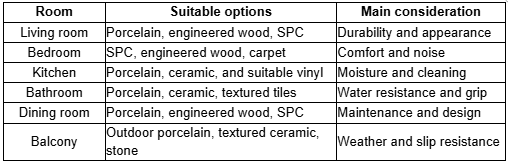
The best option depends on the exact product specifications, installation conditions and how the room is used.
Factors to Consider Before Installing New Flooring
Selecting the material is only one part of a successful flooring project. Proper preparation and installation also influence the final result.
1. Check the Existing Floor Condition
Inspect the existing surface for cracks, uneven areas, loose tiles, dampness and other defects. These problems should be addressed before installing new flooring.
2. Consider the Floor Height
Different flooring materials have different thicknesses. Check how the selected material will affect door clearances, transitions between rooms and connections with existing flooring.
3. Choose the Right Surface Finish
Glossy finishes can create a reflective appearance, while matte and textured finishes offer a different visual effect. In areas exposed to water, prioritise suitable slip-resistance properties over appearance alone.
4. Understand Maintenance Requirements
Some materials require periodic sealing or specialised cleaning products. Others need only routine sweeping and mopping. Check the manufacturer’s maintenance instructions before making a decision.
5. Use Suitable Installation Materials
Adhesives, grout, underlays and expansion provisions should be appropriate for the selected flooring and installation environment. Incorrect materials or poor workmanship can affect long-term performance.
6. Plan the Installation Sequence
Flooring installation should be coordinated with painting, carpentry, electrical work and other interior finishing activities. Planning the sequence properly helps protect newly installed surfaces from avoidable damage.
Common Flooring Mistakes to Avoid
A good-looking flooring material may still be unsuitable if it does not match the room’s practical requirements.
Avoid these common mistakes:
- Choosing flooring based only on colour or appearance.
- Installing slippery finishes in moisture-prone areas.
- Ignoring the condition of the existing subfloor.
- Overlooking door clearance and floor-level differences.
- Selecting materials without checking maintenance requirements.
- Using indoor flooring products in outdoor areas without confirming suitability.
- Choosing installation materials that are incompatible with the flooring.
- Failing to check the finished surface before accepting the work.
Taking time to evaluate these details can help reduce installation problems and unnecessary maintenance.
How to Match Flooring With Your Interior Design
Flooring should work together with the other elements of your home rather than appear as a separate design decision.
Here are a few practical considerations:
- For modern interiors: Neutral-coloured tiles and simple wood-look finishes can create a clean appearance.
- For traditional interiors: Natural stone and warm wood finishes may complement classic furniture and decorative details.
- For minimalist spaces: Light-coloured flooring can help create a simple and open visual effect.
- For luxury interiors: Large-format tiles and carefully selected stone finishes can create a more refined appearance.
Consider wall colours, furniture, lighting and the amount of natural light before finalising your flooring selection.
Frequently Asked Questions
Which flooring is best for the living room?
Porcelain tiles, engineered wood and SPC flooring are common options. The right choice depends on your preferred appearance, maintenance requirements and expected daily usage.
What flooring is suitable for bedrooms?
SPC flooring and engineered wood are popular choices for bedrooms because they offer a comfortable wood-style appearance. Carpet is another option for homeowners who prefer a softer surface.
Which flooring is suitable for bathrooms?
Porcelain and ceramic tiles are commonly used in bathrooms. Select products designed for wet areas and check their slip-resistance properties before installation.
Is the same flooring suitable for every room?
Not necessarily. Different rooms have different requirements for moisture resistance, comfort, durability and maintenance. Selecting materials according to room usage is generally more practical.
How do I maintain different types of flooring?
Follow the manufacturer’s cleaning instructions. Regular sweeping, suitable cleaning products and prompt removal of spills can help maintain most flooring surfaces. Some natural materials may also require periodic sealing.
Should I replace flooring during a home renovation?
It depends on the existing floor condition, your renovation goals and the overall interior design. Damaged, uneven or outdated flooring may justify replacement, while flooring in good condition may only need appropriate maintenance.
Final Thoughts
Choosing the right flooring for different rooms requires a balance between appearance, durability, comfort and maintenance. Porcelain tiles may be practical for kitchens and bathrooms, while engineered wood, SPC flooring or carpet may be more suitable for bedrooms and living spaces.
Before making a final decision, assess the room’s purpose, existing floor condition, installation requirements and long-term maintenance needs.
If you are planning villa renovation in Dubai, flooring selection should be considered alongside other interior improvements such as wall finishes, ceiling works, lighting and room layouts. A well-planned approach helps create a home that looks consistent and works well for everyday living.