

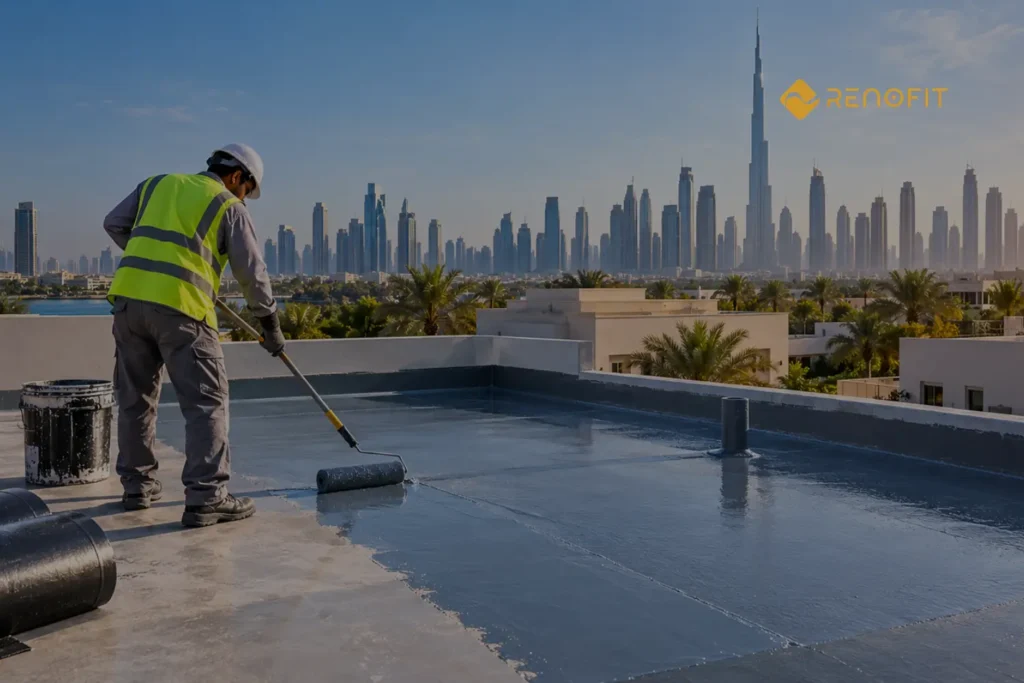
A small roof leak can leave you with peeling paint, damp ceilings, damaged insulation and repeated repair bills. In Dubai, where rooftops face intense sunlight, high temperatures and seasonal rain, a waterproofing system needs more than a quick coat of sealant to protect the building.
The right solution depends on the roof’s condition, the existing waterproofing material, drainage and the way water enters the structure. Choosing a suitable membrane and preparing the surface properly can help prevent recurring leaks and unnecessary repair work.
This guide explains the warning signs of roof waterproofing failure, the main waterproofing methods used in Dubai, how a professional repair should be carried out, and what property owners should check before hiring a contractor.
Why is roof waterproofing important for properties in Dubai?
Roof waterproofing creates a protective barrier that prevents rainwater and standing water from entering the roof slab and the building below. In Dubai, heat, ultraviolet exposure, temperature changes and seasonal rainfall can place repeated stress on this barrier. A suitable waterproofing system helps protect ceilings, finishes, insulation and other building components from moisture damage.
Flat concrete roofs are common in villas and many residential and commercial buildings across Dubai. Although these roofs may look solid, concrete alone is not a complete waterproofing solution. Small cracks, construction joints, pipe openings and drainage outlets can become entry points for water.
Dubai’s hot climate also affects the materials used on exposed roofs. Repeated heating and cooling can cause some coatings and membranes to expand, contract, lose adhesion or develop cracks as they age. The exact rate of deterioration depends on the product, installation quality, exposure and maintenance.
Waterproofing is therefore not just a finishing task. It is part of protecting the building envelope and reducing the risk of repairs to ceilings, paint, electrical fittings and interior finishes.
What are the warning signs that a roof needs waterproofing?
Common signs of roof waterproofing failure include damp patches on ceilings, peeling paint, musty smells, visible cracks in the roof coating, blistering membranes and water that remains around roof drains. These symptoms can indicate moisture entry, but the visible damage inside a building does not always identify the exact location of the leak.
Watch for these warning signs:
- Ceiling stains: Yellow or brown patches may appear after rainfall or when water reaches the slab from above.
- Peeling paint or bubbling plaster: Moisture trapped behind a finish can cause paint to lift and plaster to deteriorate.
- Cracked or blistered coatings: Damaged waterproofing layers may no longer form a continuous barrier.
- Standing water: Persistent pooling can point to blocked outlets, inadequate drainage falls or a surface defect.
- Damp parapet walls: Water can enter at the junction between the roof and the raised perimeter wall.
- Leaks around pipes and AC equipment: Poorly sealed penetrations and equipment bases can become weak points.
- Recurring mould or damp smells: These may indicate ongoing moisture, particularly in roof spaces or ceilings with limited ventilation.
A leak should not be diagnosed by looking only at the stain. Water can travel horizontally beneath finishes or along the roof slab before becoming visible indoors. A proper inspection considers the roof surface, joints, drainage, penetrations and the location of internal damage.
Which roof waterproofing methods are suitable for Dubai buildings?
The most suitable roof waterproofing method depends on the roof surface, exposure, foot traffic, existing layers and the condition of the substrate. Common options include liquid-applied polyurethane membranes, modified bitumen sheets and cementitious waterproofing systems for suitable applications. A contractor should select the system using the manufacturer’s specifications and the roof’s actual requirements.
1. Liquid-applied polyurethane waterproofing
Polyurethane, often called PU, is applied as a liquid and cures into a continuous membrane. It can be useful on roofs with multiple corners, pipe penetrations and irregular details because the coating can follow the surface when applied correctly.
Its performance depends on surface preparation, primer compatibility, application thickness, curing conditions and protection from exposure where the product requires it. Not every polyurethane product is suitable for permanent exposure to sunlight, so the specified topcoat and product data sheet matter.
2. Modified bitumen membrane
Modified bitumen waterproofing uses manufactured sheets containing bitumen modified with polymers. Depending on the product, the sheets may be installed using torch application or another approved installation method.
It is commonly used on flat concrete roofs and other roof assemblies. Correct overlaps, corner detailing, upstands and drainage connections are important because a defect at a joint can compromise the wider system. Torch-applied installation also requires trained workers and appropriate fire precautions.
3. Cementitious waterproofing
Cementitious waterproofing products are mixed and applied to suitable prepared surfaces. Flexible formulations may be used beneath tiles or protective screed in certain roof and terrace assemblies.
They are not interchangeable with exposed-roof membranes. Before choosing a cementitious system, check whether the specific product is designed for the location, expected movement, water exposure and finish above it.
4. Protective coatings and roof restoration systems
Some existing roofs may be suitable for a compatible restoration coating rather than complete removal of the waterproofing layers. This depends on the condition of the existing membrane, adhesion, moisture levels, roof detailing and the coating manufacturer’s requirements.
Applying a new layer over a failed or damp substrate without investigating the cause can hide the problem rather than solve it.
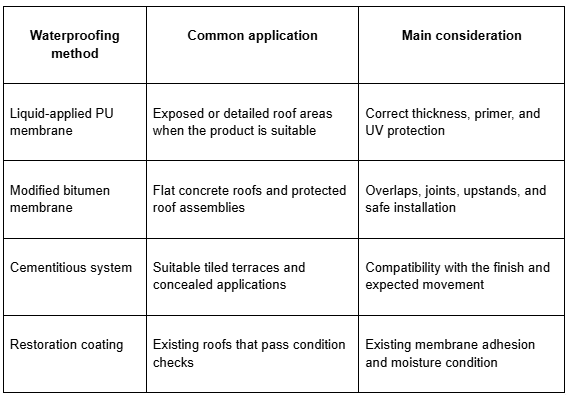
No single system is best for every roof. The product specification, installation details and compatibility with the existing roof assembly should guide the decision. Manufacturer guidance is a useful reference when comparing products and application requirements. Sika’s official website provides product information and technical documentation for waterproofing systems.
How is roof waterproofing carried out properly?
A professional roof waterproofing job starts with an inspection and diagnosis, followed by surface preparation, repair of defects, treatment of vulnerable details, membrane application and appropriate testing. The precise sequence varies by system. Skipping preparation or applying a membrane over an unresolved leak source can lead to early failure and repeated repair costs.
A typical workflow includes the following stages.
- Inspect the roof: Check the existing membrane, concrete surface, joints, parapets, drains, service penetrations and signs of water pooling.
- Identify the moisture source: Assess whether the problem relates to a damaged membrane, drainage, a joint, a pipe penetration or another part of the building.
- Prepare the surface: Remove loose or failed material, clean contaminants and repair cracks or damaged substrate as required by the selected system.
- Apply the compatible primer: Use a primer when the product specification requires one, allowing it to dry or cure as directed.
- Treat joints and details: Pay particular attention to internal corners, parapet junctions, drains and pipes passing through the roof.
- Install the waterproofing system: Apply the specified coats or membrane sheets, following the manufacturer’s coverage, thickness, overlap and curing requirements.
- Inspect and test: Use a suitable test method where appropriate and safe, then record the results before covering the membrane or handing over the roof.
- Protect the completed work: Reinstate approved finishes or protection layers where required, without damaging the waterproofing beneath.
Testing should match the roof design and membrane specification. A flood test is not suitable for every roof and should only be carried out when the structure, drainage arrangements and test method have been assessed. Other inspection or testing methods may be more appropriate for certain systems.
Why do roof waterproofing systems fail prematurely?
Roof waterproofing can fail when the wrong product is selected, the substrate is poorly prepared, application thickness is insufficient, or joints and penetrations receive inadequate attention. Blocked drainage, unprotected membranes and damage caused by later maintenance work can also contribute. Finding the cause of failure is more useful than simply covering the visible defect.
Some recurring problems include:
- Applying a new coating over a dusty, wet or poorly bonded surface.
- Choosing a product that is unsuitable for direct sunlight or standing water.
- Leaving gaps around pipes, AC equipment bases and drainage outlets.
- Applying the next coat before the previous layer has cured as specified.
- Ignoring cracks, movement joints or damaged screed beneath the membrane.
- Allowing other trades to puncture the completed waterproofing layer.
- Covering the roof before the specified inspection or testing is complete.
Consider a villa where a ceiling stain appears below the roof after heavy rain. Repainting the ceiling may improve its appearance temporarily, but the stain can return if the actual entry point remains open. A sound repair process examines the roof and traces the likely path of water before deciding whether a local repair or broader membrane replacement is appropriate.
This is an illustrative example, not a report of a specific Renofit project. The correct repair scope must be based on the conditions found during inspection.
How can property owners make roof waterproofing last longer?
Longer-lasting waterproofing depends on selecting a suitable system, following installation instructions, protecting the finished membrane and inspecting the roof periodically. Owners should keep drainage outlets clear, check visible joints and arrange an inspection when damage or leakage appears. Maintenance intervals should reflect the manufacturer’s guidance, roof exposure and the condition of the installed system.
Use this practical maintenance checklist:
- Keep roof drains and outlets free from leaves, dust and debris.
- Check visible membrane surfaces for cracks, lifting, blistering or physical damage.
- Inspect junctions around parapets, pipes, equipment bases and other penetrations.
- Arrange a professional assessment if water remains on the roof or leakage returns.
- Avoid dragging heavy equipment across exposed membranes.
- Ensure AC servicing and other roof work do not damage waterproofing details.
- Keep records of the product used, installation date, inspection findings and warranty terms.
- Follow the maintenance schedule provided by the contractor or manufacturer.
Avoid assuming that every roof membrane has the same service life. Actual performance varies with product quality, exposure, installation, roof use and maintenance. A written inspection report can help property owners plan repairs before moisture causes wider damage.
How do you choose a roof waterproofing company in Dubai?
Choose a waterproofing contractor who inspects the roof before recommending a system, explains the proposed repair scope and identifies the products to be used. Ask for a written quotation, application specifications, testing arrangements and clear warranty conditions. A low price alone does not show whether the contractor has allowed for the preparation and detailing the roof needs.
Before appointing a contractor, ask:
- Will you inspect the existing roof and identify the likely cause of the leak?
- Does the quotation include removal of failed material and substrate repairs?
- Which membrane or coating will you use, and why is it suitable for this roof?
- How will drains, parapets, joints and pipe penetrations be treated?
- What application thickness, curing time and testing method are specified?
- Will I receive product documentation and a written workmanship warranty?
- What is excluded from the quotation, including reinstatement of tiles or screed?
- How will other maintenance work be managed to avoid damaging the membrane?
Compare quotations by scope rather than price alone. One contractor may quote for a small patch while another includes removal of the damaged layer, preparation, detail treatment and full membrane replacement. Those proposals are not equivalent.
For buildings where approvals or building-management permissions apply, confirm the requirements before work begins. The appropriate process can vary with the property, development and scope of work.
When should you repair a roof leak, and when should you replace the membrane?
A local repair may be suitable when inspection identifies a limited defect and the surrounding waterproofing remains sound. Widespread cracking, poor adhesion, repeated leaks or deterioration across multiple areas may indicate that a larger repair or complete replacement is needed. The decision should follow a roof condition assessment rather than the location of the first visible stain.
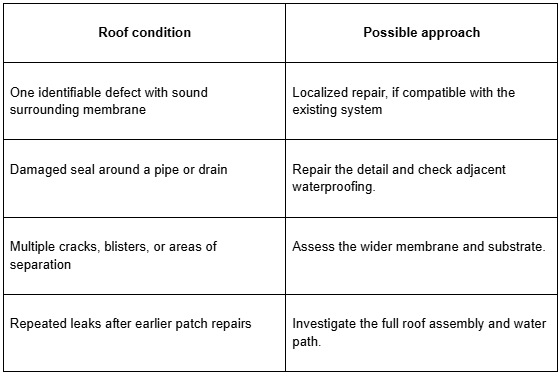
A replacement may involve more initial work, but repeated patching can become costly if the underlying membrane has deteriorated across a large area. Equally, replacing an entire roof without a proper diagnosis may be unnecessary. The goal is to choose the smallest scope that resolves the cause reliably and suits the condition of the whole roof.
What should you know before starting roof waterproofing in Dubai?
Before work begins, confirm the roof’s condition, the proposed waterproofing system, surface preparation, treatment of details, testing requirements and warranty terms. Ask for the scope in writing and check whether roof access, existing finishes, drainage repairs or approvals affect the work. Clear documentation makes it easier to compare quotations and assess the completed job.
A practical pre-work checklist includes:
- Roof inspection findings and photographs.
- Recommended system and product details.
- Surface preparation and repair requirements.
- Treatment of drains, joints, parapets and penetrations.
- Application and curing requirements.
- Testing and handover documentation.
- Warranty coverage, exclusions and maintenance obligations.
These details help property owners understand what they are paying for and what standards the completed work is expected to meet.
Frequently asked questions about roof waterproofing in Dubai
What is the best roof waterproofing method for a Dubai villa?
There is no single best method for every villa. Liquid-applied polyurethane and modified bitumen membranes are common options, but the choice depends on roof design, exposure, existing layers, drainage and the manufacturer’s specifications.
How do I know whether my roof waterproofing has failed?
Look for ceiling stains, peeling paint, blistered or cracked coatings, persistent ponding and leaks near roof penetrations. These signs warrant an inspection, but they do not always identify the exact entry point.
Can I waterproof a roof without removing the old membrane?
Sometimes. A restoration system may work if the existing membrane is sufficiently sound, dry and compatible with the new product. If the old layers have widespread damage or poor adhesion, removal may be necessary.
Does roof waterproofing need testing after installation?
Testing or inspection should follow the requirements of the selected system and roof design. A suitable test helps identify defects before the membrane is covered or the roof is returned to service.
How often should a roof be inspected?
Follow the system manufacturer’s recommendations and arrange additional inspections after visible damage, recurring leaks or significant maintenance work. Roofs with ageing membranes or known drainage problems may need closer attention.
Does waterproofing also fix roof drainage problems?
Not by itself. Waterproofing prevents water penetration, while drainage systems help move water away from the roof. Blocked outlets or poor drainage falls may need separate correction as part of the overall repair.
Need help with roof waterproofing in Dubai?
Roof leakage should be addressed at its source, not hidden behind a fresh coat of paint. The right approach begins with understanding the roof condition, selecting a compatible waterproofing system and making sure the installation details receive proper attention.
Renofit is a trusted renovation company in Dubai, providing renovation and building maintenance services. If your property has recurring roof leaks, damp ceilings or signs of waterproofing damage, contact our team to discuss the issue and identify the appropriate next step.
Planning a renovation or waterproofing-related repair? Explore Renofit’s renovation works and contact the team to discuss your property requirements.